Aqeedat, driven from Arabic, means faith, veneration and alliance, and this work is an exploration of the intertwined fates of Palestine and Kashmir, two lands that somehow share a similar fate of shared struggle and religious belief.


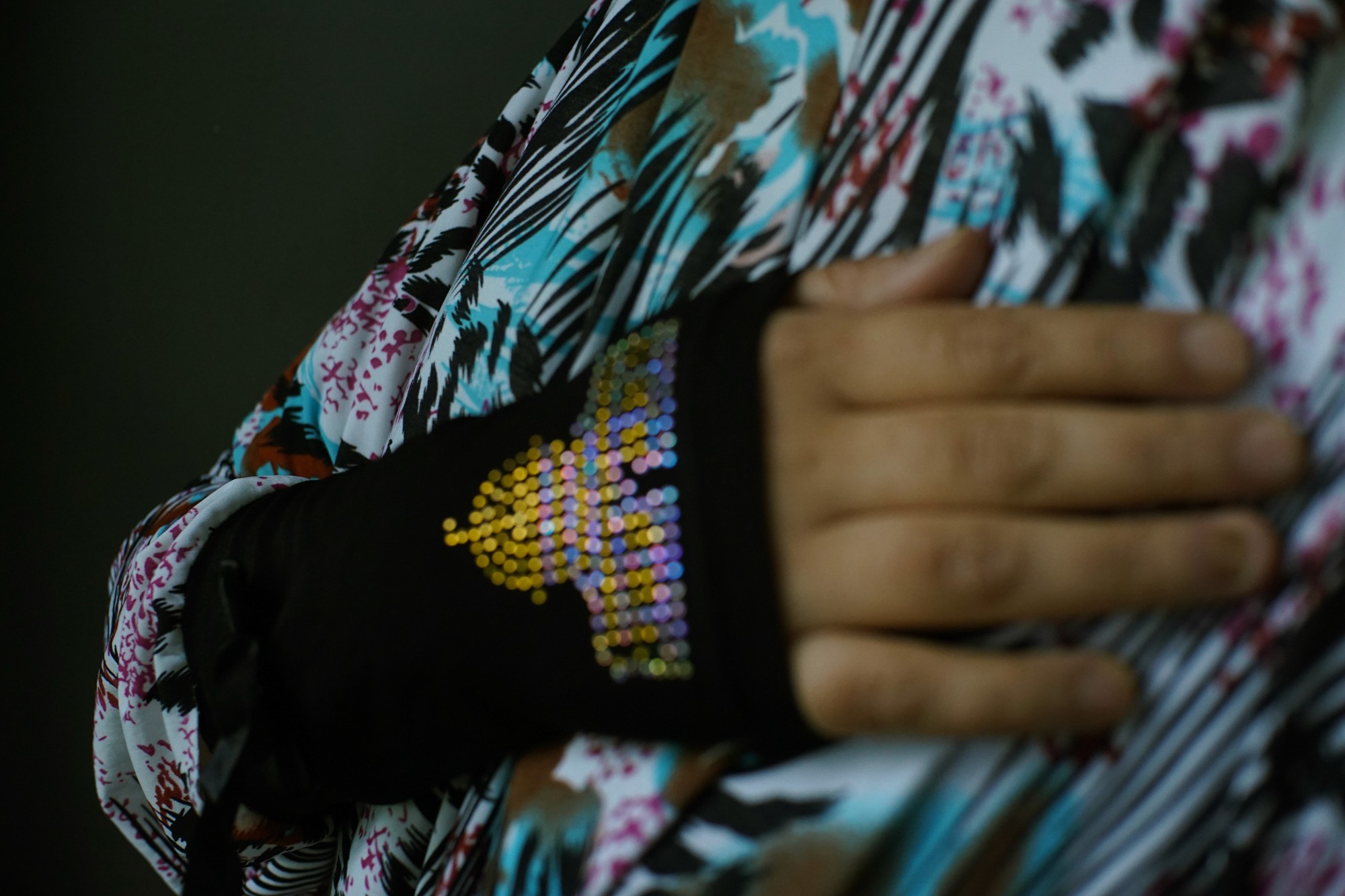
Most of these photos were taken during the protests on Youm e Qudus, the pro-Palestine rallies that are held annually in Kashmir. These are the only times a controlled solidarity with Palestine is allowed in Kashmir. The work is comprised of two parts – one where I have documented Pro-Palestine protests, and the other where I have staged photos as my own gestures of solidarity.

Smoke rises from a residential house during a gun battle between suspected militants and Indian paramilitary forces in Khanyar, Srinagar, Kashmir, on November 2, 2024.
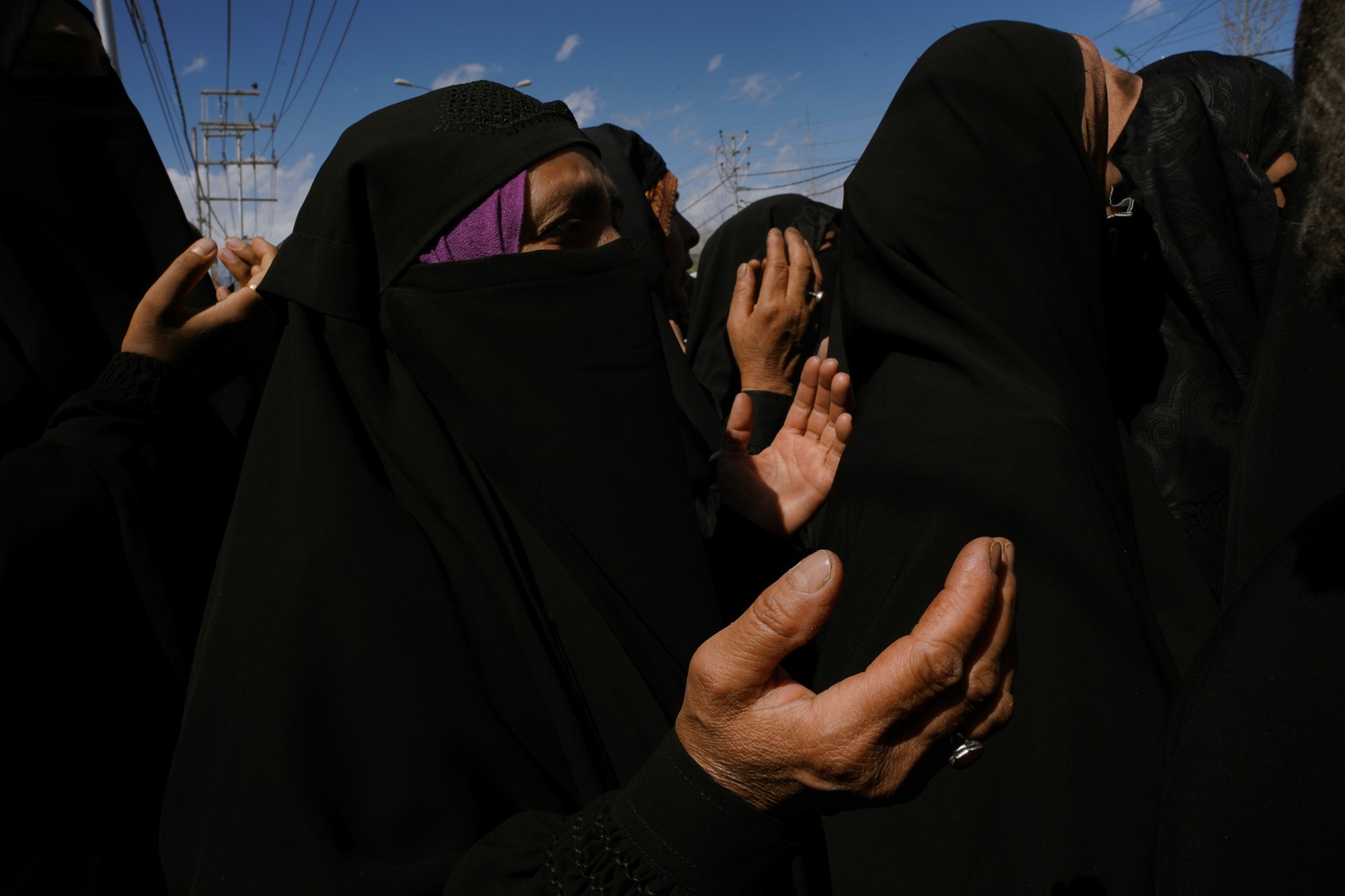

As a documentary photographer, I intend to take photos that record our histories and stories. I believe documentation is crucial. It is our only method of dissent. My method is very organic, over the years I have stopped forcing myself to hunt down the ‘good image’. I let the process flow and when I see a moment I try my best to make it a good composition and control the light. Above all, I try to make sure my presence with gear in my hand is not bothering anyone. Over the last 7 years, the most important thing I have learned is that it is equally important to know when to put your camera down as it is when to keep it ready. I tend to document the women most because I believe that their expressions of solidarity and resistance often get lost in dominant narratives.

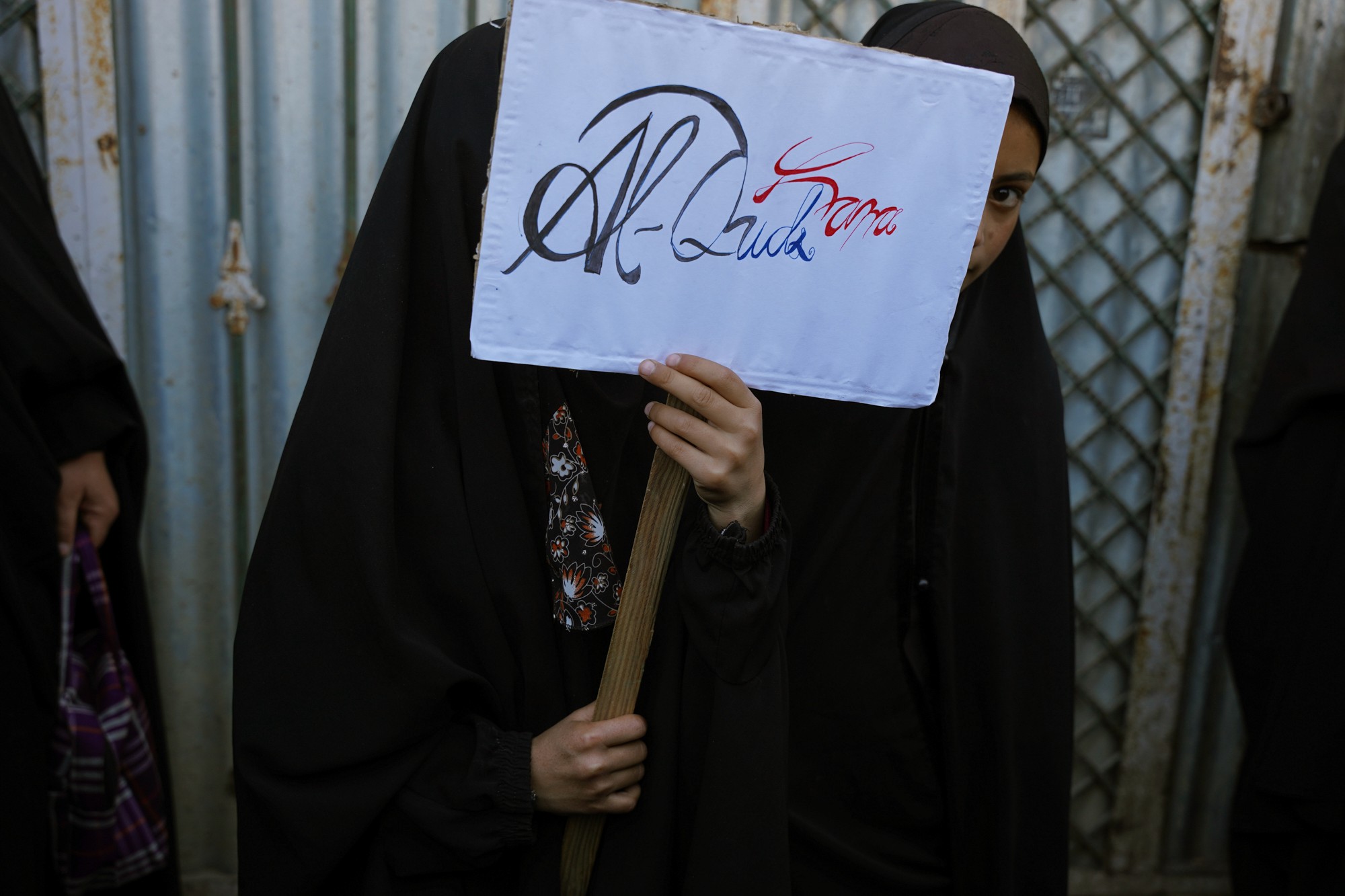

I wish more people paid attention to the mechanism of occupation and how it works strategically, and in everyday life, not just when it becomes very obvious. I wish people would understand that peace is a facade, and there is no peace and freedom until everyone is free. I also wish people understand how occupation uses Islamophobia as a tool to dehumanise the people of Palestine.


Aqeedat, driven from Arabic, means faith, veneration and alliance, and this work is an exploration of the intertwined fates of Palestine and Kashmir, two lands that somehow share a similar fate of shared struggle and religious belief.
Most of these photos were taken during the protests on Youm e Qudus, the pro-Palestine rallies that are held annually in Kashmir. These are the only times a controlled solidarity with Palestine is allowed in Kashmir. The work is comprised of two parts – one where I have documented Pro-Palestine protests, and the other where I have staged photos as my own gestures of solidarity.
Smoke rises from a residential house during a gun battle between suspected militants and Indian paramilitary forces in Khanyar, Srinagar, Kashmir, on November 2, 2024.
As a documentary photographer, I intend to take photos that record our histories and stories. I believe documentation is crucial. It is our only method of dissent. My method is very organic, over the years I have stopped forcing myself to hunt down the ‘good image’. I let the process flow and when I see a moment I try my best to make it a good composition and control the light. Above all, I try to make sure my presence with gear in my hand is not bothering anyone. Over the last 7 years, the most important thing I have learned is that it is equally important to know when to put your camera down as it is when to keep it ready. I tend to document the women most because I believe that their expressions of solidarity and resistance often get lost in dominant narratives.
I wish more people paid attention to the mechanism of occupation and how it works strategically, and in everyday life, not just when it becomes very obvious. I wish people would understand that peace is a facade, and there is no peace and freedom until everyone is free. I also wish people understand how occupation uses Islamophobia as a tool to dehumanise the people of Palestine.
Ufaq Fatima is a documentary photographer and journalist from Kashmir whose practice foregrounds memory, resilience, and the politics of representation. She works at the confluence of memory, displacement, erasure, and the cyclical nature of power, navigating fluidly between personal narratives and collective histories. Fatima is a recent recipient of the PhotoHumanity Grant 2026. She is also a founding member of Her Pixel Story, a growing women-led photo collective from Kashmir.
Ufaq Fatima is a documentary photographer and journalist from Kashmir whose practice foregrounds memory, resilience, and the politics of representation. She works at the confluence of memory, displacement, erasure, and the cyclical nature of power, navigating fluidly between personal narratives and collective histories. Fatima is a recent recipient of the PhotoHumanity Grant 2026. She is also a founding member of Her Pixel Story, a growing women-led photo collective from Kashmir.

PALESTINE IS EVERYWHERE